Multi-layer PCB, HDI PCB, Rigid-flex PCB, PCBA factory


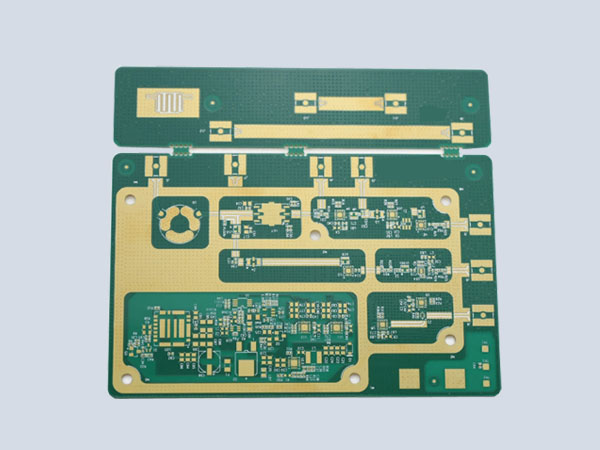
Method 1: Cut the copper foil according to the circuit diagram requirements. 2. Place the wax paper on the steel plate, use a pen to engrave the circuit diagram on the wax paper in a 1:1 ratio, then engrave the circuit diagram on the wax paper according to the size of the circuit board, and then cut the wax paper according to the size of the paper. Mix a small amount of paint and talcum powder into a thin and appropriate printing material, dip the printing material with a brush, evenly apply it to the wax paper, repeat several times, and the circuit can be printed on the printed board. This template can be reused and is suitable for small batch production. 3. Prepare 1 gram of potassium chlorate and 40 milliliters of hydrochloric acid with a concentration of 15% to form a corrosion solution, and apply it to the parts of the circuit board that need to be corroded. 4. Rinse the corroded printed board repeatedly with water. To keep the printing board clean, wipe off the paint surface with banana oil and wash it a few more times without leaving any corrosive solution. Apply a layer of pine essence and make holes after drying. Method 2: There are many methods for producing printed circuit boards under amateur conditions, but they are not time-consuming, that is, the "process" is complex, or the quality is not satisfactory. And my method of making a printed version is one of the better comprehensive effects, as follows: 1. Label diagram. The diagram shows the solder pads in the diagram, and the wiring can be done with a single line, but the position is not specified Accurate size requirements. 2. Cut the printed board and clean the copper foil surface according to the size of the printed board diagram. 3. This step can be omitted by copying the picture onto the printing plate with a copy paper. If it is relatively simple, the plate making personnel can skip it. 4. Paste standard pre cut symbols (solder pads) with different outer diameters according to the actual situation, and paste strips of different widths according to the magnitude of the current. Standard pre cut symbols and tape are available for sale in electronic stores. The standard for pre cut symbols is usually D373 (0D-2.79, ID-0.79), D266 (0D-2.00), ID-0.80), D237 (OD-3.50, ID-1.50), and some other types. It is best to buy paper-based materials (black) and avoid using plastic (red) materials as much as possible. The specifications of general straps are 0.3.0.9.1.8.2.3.3.7, etc. All are units in millimeters. 5. Use a soft small hammer, such as rubber, plastic, etc., to lightly tap the sticker to fully bond it to the copper foil. Pay attention to the corners of the line. When the weather is cold, it is best to use a heater to heat the surface to enhance the adhesion effect. 6. Place it in ferric chloride solution for corrosion, but be careful not to exceed a temperature of 40 ℃. After rusting, it should be cleaned in a timely manner, especially in areas with fine threads. 7. Polish the copper foil with fine sandpaper, then apply ethanol solution, cool and dry to make it. The quality of this type of printed board is similar to that of regular printed boards. A 0.3mm strap can be used between the two legs of the IC, which can greatly reduce short jumps on the board and save time. Method 3: 1. Dissolve one part of lacquer sheet (also known as insect glue, available in chemical raw material stores) in three parts of anhydrous alcohol and stir appropriately. After it is completely dissolved, drop a few drops of medical violet solution (gentian violet) to make it appear a certain color. After stirring evenly, describe the circuit board in an appropriate way. 2. First, polish the copper-clad board with fine sandpaper, and then use the duckbill pen in the drawing instrument (or the ink duckbill pen used to draw shapes on a compass) to draw. The duckbill has a nut to adjust the thickness of the strokes, which can be adjusted and borrowed with a ruler Draw very fine straight lines with a triangular ruler and create smooth lines Uniform, without jagged edges, giving a smooth flow Smooth feeling; Meanwhile, Chinese characters English, phonetic symbols, phonetic symbols, phonetic symbols, phonetic symbols. 3. If the drawn lines are too dense around, a little lacquer can be added. If they cannot be opened, they are too thick and require a few drops of anhydrous alcohol. If there is no problem with drawing errors, just use a small stick (matchstick), make a small cotton swab, dip it in a little anhydrous alcohol, it can be easily wiped off, and then draw again. After drawing the circuit board pattern, ferric chloride solution can corrode it. After the circuit board is corroded, use a cotton ball dipped in anhydrous alcohol to wipe off the protective paint. After a little air drying, apply rosin along with it. 4. Due to the fast evaporation rate of alcohol, the prepared protective paint should be sealed and stored in small bottles (such as ink bottles). After use, do not forget to cover the bottle cap. If you find that the concentration has increased during the next use, just add an appropriate amount of anhydrous alcohol. Method 4: Immediately stick the copper foil onto the copper foil sheet, then draw the circuit on the veneer, and then use a carving knife to engrave it into the veneer to form the desired circuit. Remove the non circuit parts, and finally use ferric chloride corrosion or current electrolysis method to make the ideal circuit board. The corrosion temperature is about 55 ℃, and the corrosion rate is relatively fast. Rusted circuit boards should be cleaned with clean water, immediately pasted on the circuit, punched, wiped clean, and coated with rosin alcohol solution. Method 5: 1. Reasonably arrange the density of components and the position of each component based on the shape of the components used in the circuit diagram and the size of the printed board area. The positioning of components should follow the principle of large before small, and overall before local, so that adjacent components in the circuit are placed nearby, arranged neatly and evenly. 2. Components at turns and intersections of two lines shall not be bent at right angles, and curved transitions shall be used, without crossing or bypassing each other. When some conductors really cannot achieve this, it is possible to consider printing the wires on the back of the printed board and then connecting them to the front circuit with rivets, or connecting them with another insulated wire during soldering. 3. It is better to have a distance between the input and output parts to avoid mutual interference. Method 6: Radio enthusiasts are all worried about making circuit boards. We will now introduce a method called "YaYin method" for printed circuit boards. Take the following measures: 1. Print circuit board diagrams on an 80 gram photocopier in a 1:1 ratio. Hand drawing is also possible, but the base paper should be flat. 2. Find a fax machine, remove the fax paper from the machine, and replace it with hot melt plastic film. Place the circuit diagram at the entrance of the fax machine and use the fax machine copy button to copy the diagram onto the hot melt plastic film. By then, the "printed original" of the printed circuit board had been completed. 3. Lay the plastic film of the drawing flat on the copper-clad board with double-sided tape. This product should be flat, without wrinkles or creases, otherwise it will affect the production effect of the circuit board. 4. Use a brush to evenly apply the paint onto the plastic film. Note: do not brush downwards, only in one direction, otherwise the plastic film will wrinkle together and the lines on the copper plate will overlap. After all the circuits have been brushed, carefully remove the plastic film. At this time, a printed circuit board is printed out. Wait for it to dry, it will corrode. If you want to print multiple parts, you can make a wooden frame that is slightly larger than the circuit board, lay the screen (available from our company) flat on the wooden frame, and fix it in place. Stick the fixed plastic film under the screen with double-sided tape. Place the copper-clad cardboard on the table, close the screen (align the printed image and copper-clad board left and right), use a paintbrush to brush the paint in one direction, and then take it to the grid. The printed circuit board has been completed. If there are defects, they can be painted or repaired. The above process should be noted that when painting, the hand force should be light or heavy. If the paint film is too heavy, the lines will run off the lace, and if the paint film is too light, the lines will break. The plastic film must face upwards.
 QR code WeChat
 Whatsapp