Multi-layer PCB, HDI PCB, Rigid-flex PCB, PCBA factory



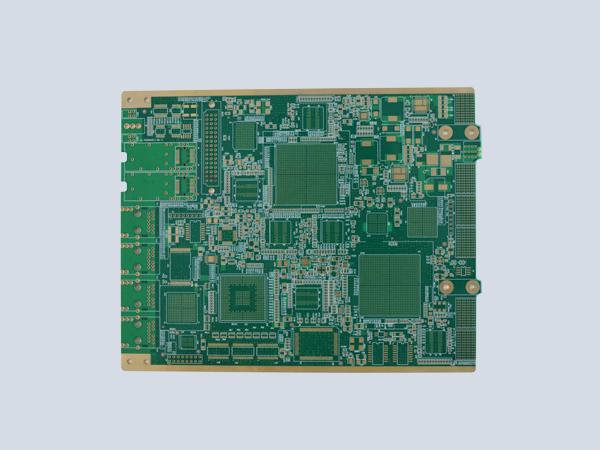
1. While meeting the requirements, trace routing should be as simple as possible. The order of routing selection is single-layer, then double-layer, then multi-layer.
2. Ground wires should be placed next to analog circuit input lines for shielding. Wires on the same layer should be evenly distributed, and the conductive areas of each layer should be relatively balanced.
3. Signal lines should use diagonal lines or smooth transitions when changing direction to avoid electric field concentration, signal reflection, and additional impedance.
4. Digital and analog circuits should be separated in wiring to prevent mutual interference. Ground wires should be placed between signal lines of different frequencies to prevent crosstalk. For ease of testing, necessary breakpoints and test points should be included in the design.
5. Grounding and power supply connections for circuit components should be kept as short and close as possible to reduce internal resistance.
6. Wires on upper and lower layers should be perpendicular to each other to reduce coupling. Avoid aligning or paralleling wires on upper and lower layers.
7. Multiple I/O lines in high-speed circuits, as well as I/O lines in circuits such as differential amplifiers and balanced amplifiers, should be of equal length to avoid unnecessary delays or phase shifts.
8. When connecting PCB pads to larger conductive areas, use thin wires with a length of at least 0.5m and a width of at least 0.13mm for thermal isolation.
9. Wires closest to the edge of the SMB should be at least 5mm away from the edge of the SMB. Ground wires can be placed closer to the edge of the SMB if necessary.
10. Common power and ground wires on double-sided SMBs should be routed as close to the edge of the SMB as possible and distributed on both sides. For multi-layer SMBs, power and ground layers can be placed on the inner layers, connected to the power and ground lines of each layer through plated-through holes. Large-area wires and power and ground lines on inner layers should be designed in a mesh pattern.
 QR code WeChat
 Whatsapp